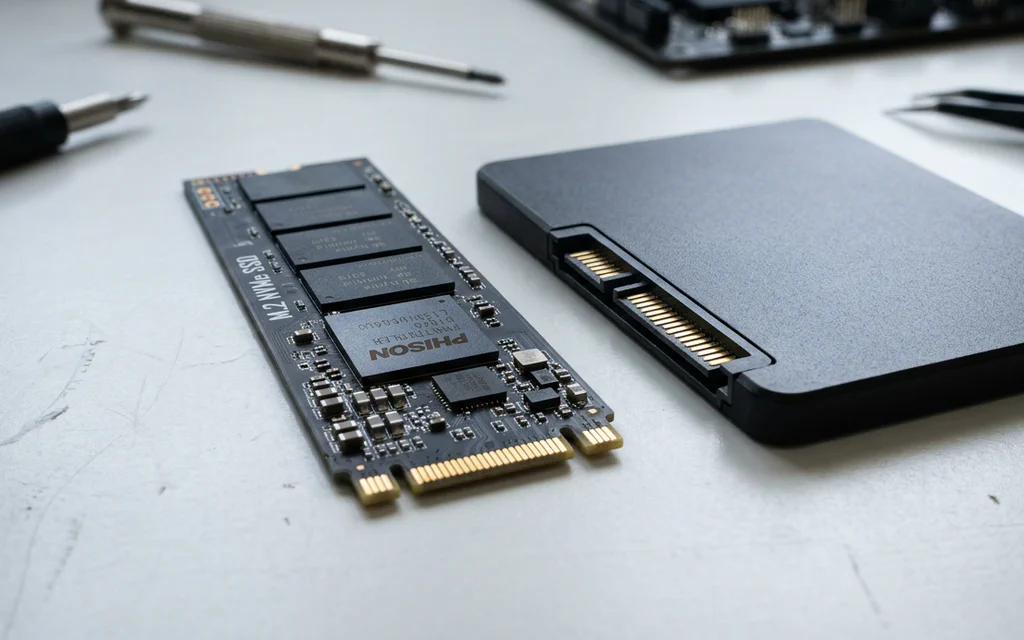
NVMe vs SATA SSDs Explained: Speeds, Slots, and What Actually Matters in 2026
If you look at the packaging on a modern solid-state drive, the marketing numbers look absurd. A standard SATA drive advertises read speeds around 550 MB/s. A mainstream PCIe 4.0 NVMe drive advertises 7,000 MB/s — nearly thirteen times faster. A PCIe 5.0 drive pushes past 14,000 MB/s. Naturally, you would expect Windows to boot thirteen times faster and your games to load in the blink of an eye. Yet when you plug in that blazing-fast NVMe drive, Windows boots in 8 seconds instead of 10. Cyberpunk 2077 loads in 11 seconds instead of 13. Why does a 1,300% theoretical speed advantage turn into a barely noticeable difference in daily desktop use? And with both drive types sitting on store shelves in 2026, where does NVMe truly matter, and is there any reason left to buy a SATA drive? Let us break down how these two storage technologies work, compare their live market pricing and real-world performance, and highlight the most common compatibility traps when upgrading your PC or laptop. ...