Browse the full Price2Click archive of tech articles, buying guides, comparisons, and practical explainers.
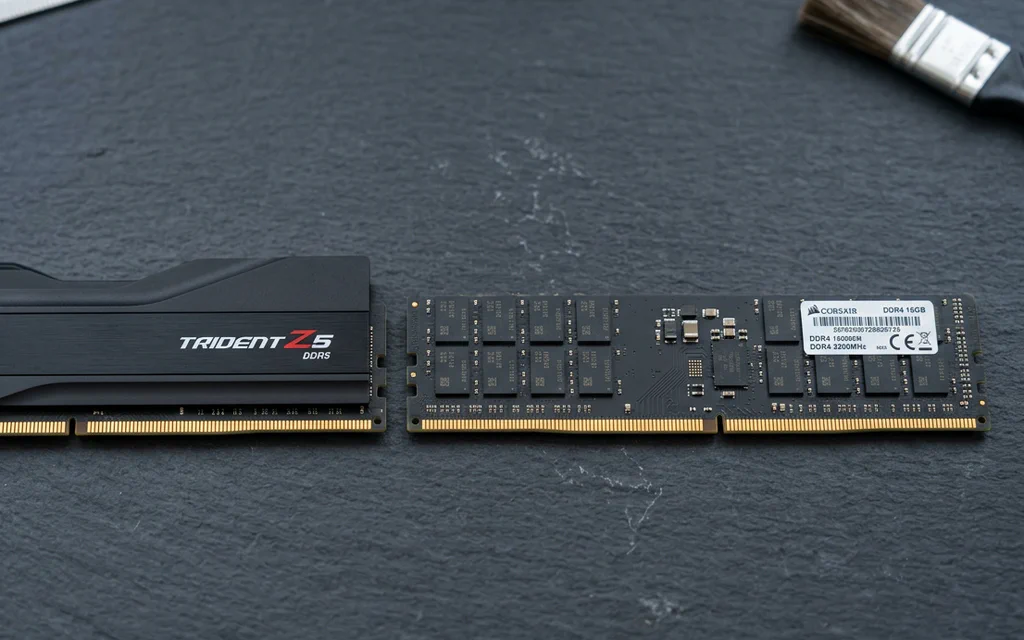
DDR4 vs DDR5 RAM Explained: Real Speed, Latency Math, and What Matters in 2026
On paper, DDR5 specs look contradictory. A typical DDR5 kit runs at 6000 MT/s, but pairs that frequency with what looks like a loose timing: CL30 or CL36. Older DDR4 runs at a much lower 3200 MT/s, yet advertises CL16. That leads a lot of first-time builders to assume DDR4 responds faster, or that DDR5 traded latency away just to get bigger marketing numbers. It didn’t. CAS Latency is measured in clock cycles, not nanoseconds. Once you run the actual math, DDR5-6000 CL30 delivers the exact same 10.0-nanosecond first-word response time as DDR4-3200 CL16, while pushing nearly double the memory bandwidth. The real decision in 2026 isn’t about theoretical latency. It comes down to motherboard platform locks (AMD AM5 won’t boot with DDR4, Intel LGA 1700 forces a choice between a DDR4 or DDR5 board upfront), severe signal degradation when running four sticks instead of two, and whether 1% low frame consistency in modern games justifies the cost of a platform overhaul. Here is how memory timing actually works, what independent lab testing shows in games, and how to avoid the most common buying traps. ...