
If I were helping a friend buy a first real camera today, I would start with the Canon EOS R50 kit and then branch from there. It is small, friendly, modern, and usually priced close enough to entry-level cameras that it makes sense for most people who want to learn photography without buying into a dead end.
That does not mean everyone should buy the same body. A parent shooting kids indoors, a student making YouTube videos, a traveler who wants beautiful JPEGs, and a beginner who already knows they want wildlife all need different starting points. The trick is not finding “the best camera” in a vacuum. It is matching your first camera to the kind of photos you will actually take in the next year.
Price checks for this update use major U.S. retailer and manufacturer routes on May 26, 2026. Camera prices move often, so treat the numbers as bands, not promises. Before checkout, verify the exact kit lens, condition, seller, return window, warranty, and whether the battery/charger are included.
Our Shortlist
| Start here if... | Camera to price first | Why it fits | Watch out |
|---|---|---|---|
| You want the safest first pick | Canon EOS R50 with RF-S 18-45mm kit lens | Friendly controls, compact body, good autofocus, and a kit price that often lands in a sane beginner range. | Canon RF-S lens choice is still narrower than Sony E or Fujifilm X. |
| The budget is tight | Canon EOS R100 kit | The cheap new-camera route when it is meaningfully below the R50. | Do not buy it if it is only a small discount from the R50. |
| You want room to grow | Nikon Z50II with 16-50mm kit lens | A more serious-feeling beginner body with strong controls and a clearer upgrade path. | Costs more than the basic beginner kits. |
| You care about color and the shooting feel | Fujifilm X-T50 or X-M5 | Fuji is the fun lane: color profiles, tactile controls, and a camera you may actually want to carry. | The X-T50 is not a budget beginner body; the X-M5 is more video/creator focused. |
| You already know you will shoot action, wildlife, or serious hybrid video | Sony a6700 | Excellent autofocus, strong video features, in-body stabilization, and a huge E-mount lens ecosystem. | It is a stretch purchase for a true beginner once you add a lens. |
Interactive First Camera Finder
Find the recommended mirrorless body and kit lens tailored to your specific photography goals and budget:
Camera Matcher: Which Body Fits Your Goals?
Select your primary photography priorities to get a targeted body and kit lens recommendation.
Best First Camera for Most People: Canon EOS R50
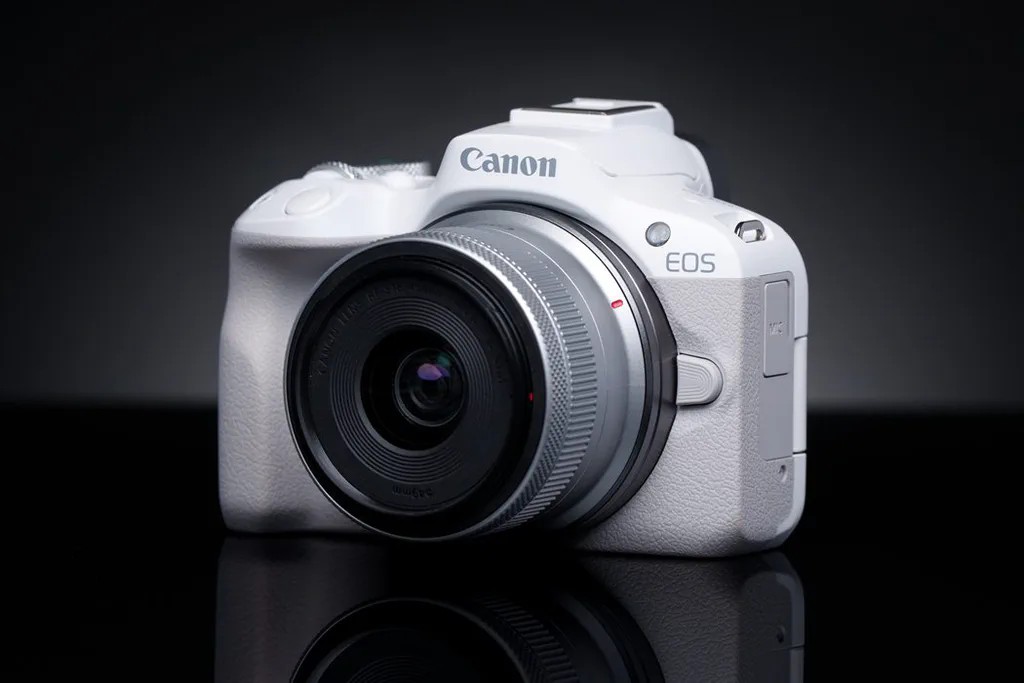
Canon EOS R50
Start here if you want a first camera that feels approachable, focuses well, and does not demand a photography degree before you can enjoy it.
- APS-C
- RF-S mount
- Small body
- 4K video
The R50 is the first camera I would price because it gets the beginner balance right. It has a viewfinder, a simple body, Canon’s friendly menus, strong subject detection for the class, and enough video ability for family clips, travel reels, school projects, and YouTube experiments.
The important shopping detail is the kit lens. For most beginners, the RF-S 18-45mm kit makes sense because it lets you start immediately. It covers everyday scenes, portraits from a comfortable distance, food, city walks, pets, and travel details. It will not magically turn a dark room into a studio, but it will teach you framing, exposure, and what focal lengths you actually like.
Buy the R50 when the kit price is close to the lower beginner-camera lane. If the R100 is only a little cheaper, I would pay for the R50. If the R50 jumps too high, compare it with the Nikon Z50II and used/open-box options before checkout.
Cheapest New Route: Canon EOS R100
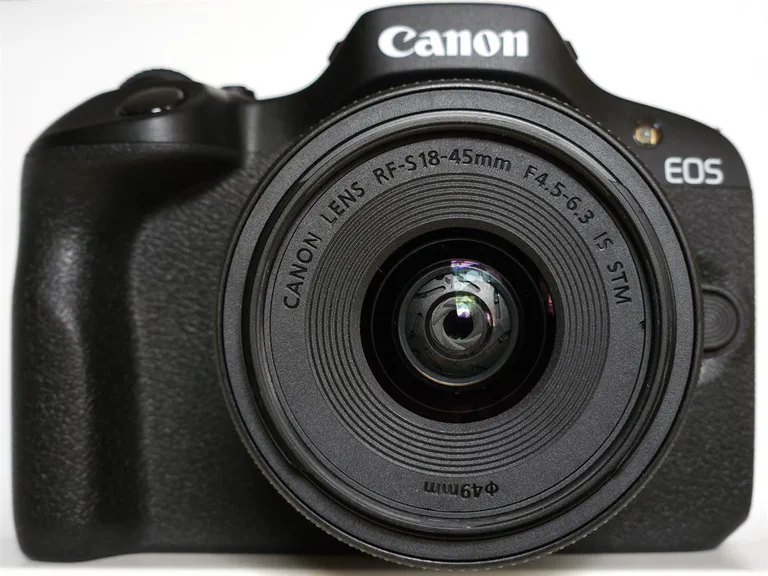
Canon EOS R100
The R100 is the price-first choice, not the dream first camera. It makes sense only when the discount is real enough to fund a memory card, spare battery, small bag, or better first lens later.
- APS-C
- RF-S mount
- Lowest new route
- Kit lens option
The R100 belongs in this guide because many beginners do not have an $900 to $1,200 camera budget. That is normal. A cheaper camera used often is better than a better camera you keep postponing.
But I would not lead with it. The R100 is what you buy when the price gap is obvious. If a sale makes it hundreds less than the R50 kit, it can be a sensible first step. If the gap is small, the R50 is easier to recommend because it is the friendlier camera to live with.
Best Growth Pick: Nikon Z50II
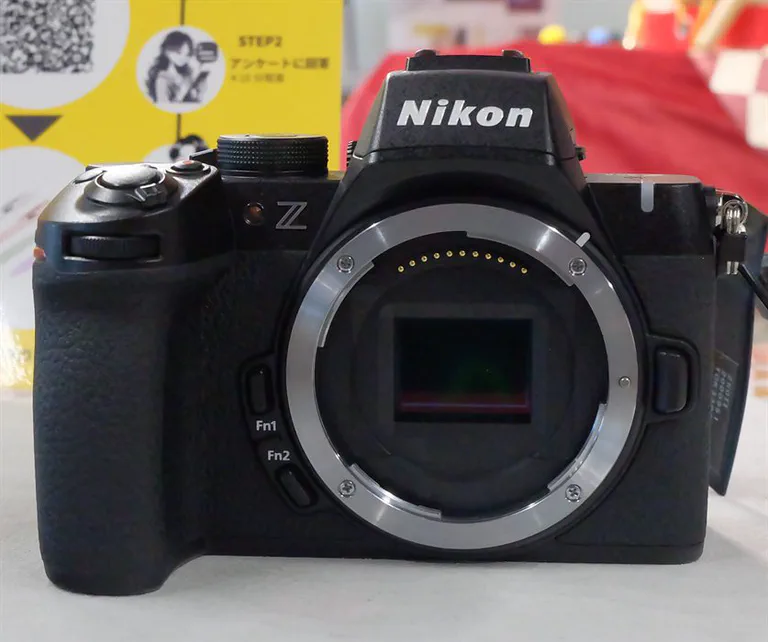
Nikon Z50II
Choose the Z50II if you want your first camera to feel a little more serious from day one, especially for viewfinder shooting, controls, and learning manual habits.
- APS-C
- Nikon Z mount
- Good grip
- Creator features
The Z50II is the camera I would push a beginner toward when they already sound serious. They are not just asking for “a camera”. They are asking about learning exposure, shooting family events, carrying a camera on trips, maybe editing RAW files, maybe buying a second lens later.
It is not the cheapest route. That is the point. The Nikon is less about getting the lowest starter price and more about buying a body that feels good enough to keep learning on. If you are the kind of person who quits tools that feel toy-like, the Z50II deserves a serious look.
Best Stretch Pick: Sony a6700
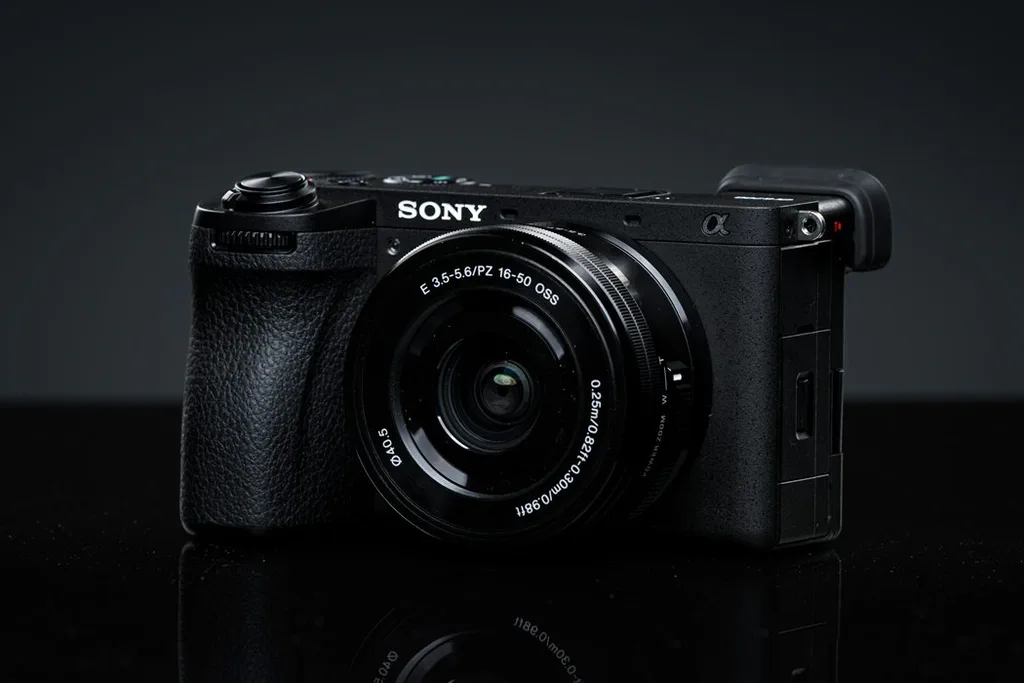
Sony a6700
The a6700 is the "I know I am staying with this" pick: excellent autofocus, strong video, stabilization, and one of the broadest lens ecosystems in mirrorless cameras.
- APS-C
- Sony E mount
- IBIS
- Strong AF
The a6700 is the easiest camera here to over-recommend. It is genuinely strong, but it can also be too much money for a first step. Buy it if you already know you will shoot sports, wildlife, action, hybrid video, or fast-moving family moments and you are comfortable buying into Sony E lenses.
If you only want better vacation photos, start lower. If you are already watching lens reviews and thinking about long-term system choice, the a6700 makes more sense.
Where Fujifilm Fits
Fujifilm deserves a separate lane because the appeal is emotional as much as technical. Cameras like the X-T50 and X-M5 make photography feel fun. The film simulations are not magic, but they do help many beginners enjoy JPEGs straight from the camera instead of spending every evening inside editing software.
The X-T50 is the still-photo and creative-control pick when you want tactile dials, strong image quality, and a camera that feels like a small creative object. It is not the budget answer.
The X-M5 is more of a creator/video lane. It can be appealing if you want a compact camera for talking-head clips, travel video, and social content, but the no-viewfinder style is not ideal for every new photographer. If you imagine yourself holding the camera to your eye and walking around like a street photographer, make sure you actually want that body style before buying.
Should You Buy Full-Frame First?
Usually, no. Not as a default.
Full-frame can be beautiful. It can give cleaner high-ISO files, more background blur, and more room for serious portrait/event work. But the body is only the first bill. Full-frame lenses are often larger and more expensive, and a cheap full-frame setup with the wrong lens can be less enjoyable than a good APS-C kit.
For a first camera, I would rather see you buy:
- an APS-C body you will carry;
- a sensible kit zoom;
- one fast prime lens later, after you know what you like shooting;
- a memory card, small bag, and maybe a spare battery;
- time to practice.
Full-frame makes sense when you already know the reason: portraits, events, paid work, low-light venues, or a specific lens ecosystem. If the reason is only “professionals use it”, wait.
Kit Lens, Body Only, or Used?
For most beginners, buy the kit. It is the least romantic answer and often the right one.
A kit zoom lets you learn what focal lengths mean in real life. You will discover whether you keep shooting wide scenes, portraits, details, pets, food, kids, sports, or video. That experience tells you what second lens to buy. Guessing that second lens on day one is how people end up with expensive glass they rarely use.
Body-only makes sense if:
- you already own compatible lenses;
- you know the exact lens you want first;
- a retailer bundle is clearly worse value than buying body and lens separately;
- you are buying used/open-box and the kit lens is missing or overpriced.
Used and refurbished can be smart, but be more boring than brave. Prefer manufacturer refurbished, major retailer open-box, or a camera store with a real return window. Check shutter count when possible, inspect the sensor, verify battery health, test every button, and make sure the charger, caps, strap, and lens are included.
The Beginner Mistakes That Waste Money
The first mistake is buying for someone else’s hobby. If you watch wildlife YouTubers, you will think you need reach. If you watch portrait channels, you will think you need full-frame blur. If you watch street photographers, you will think the camera has to look cool. Those can all be true for the right person, but not for every first camera.
Use this simple check:
- Name your real subject. Family, travel, street, pets, sports, products, YouTube, school, cars, food, nature.
- Name your real place. Indoors at night, daylight outdoors, gyms, cafes, parks, bedroom studio, school events.
- Name your patience level. Do you want JPEGs now, or do you want to learn editing?
- Name your carrying habit. If the camera is too big to carry, it is the wrong camera.
- Name your second purchase. Lens, bag, tripod, microphone, flash, battery, or nothing yet.
If you cannot answer those, buy the safer kit and spend the first month shooting. The camera will teach you what the spec sheet cannot.
When Your Phone Is Still Enough
Do not buy a camera just because the internet made photography gear feel urgent. If you mostly shoot quick social photos, food at restaurants, documents, kid moments in bad light, or short casual clips, your current phone may be the better tool.
A camera becomes worth it when you want one or more of these:
- a real zoom lens or better lens choice;
- a viewfinder in bright sunlight;
- better handling and physical controls;
- RAW files with more editing room;
- a flash or off-camera lighting path;
- a camera that separates you from phone notifications while you shoot.
If your main frustration is that phone photos look flat, also read our flagship camera-phone guide before spending on a separate system. If the budget is tighter, our budget camera-phone guide is the more realistic comparison. Sometimes better light, cleaner lenses, and a little editing solve the problem without a second device.
Final Recommendation
Most new photographers should price the Canon EOS R50 kit first, compare the Canon EOS R100 only if the budget is tight, step up to the Nikon Z50II if handling and long-term learning matter, choose Fujifilm if the shooting feel and color are part of the fun, and stretch to the Sony a6700 only if you already know you need its autofocus, stabilization, video, and lens ecosystem.
The best first camera is not the one with the loudest spec sheet. It is the one you will carry, understand, and keep using after the first weekend.
Sources Worth Checking
For this update, the claim-critical sources were the official Canon, Nikon, Sony, and Fujifilm product/spec pages, current retailer routes for kit availability, and recent beginner-camera guidance from established camera publications. The full internal evidence trail stays in the Price2Click article packet; the reader-facing point is simple: verify the exact kit, seller, condition, return window, and included lens before checkout.